The babà: a Polish king's cake that became Neapolitan
An exiled king, a cake that was too dry, a soak of liqueur. The babà travelled a long way before becoming Neapolitan.
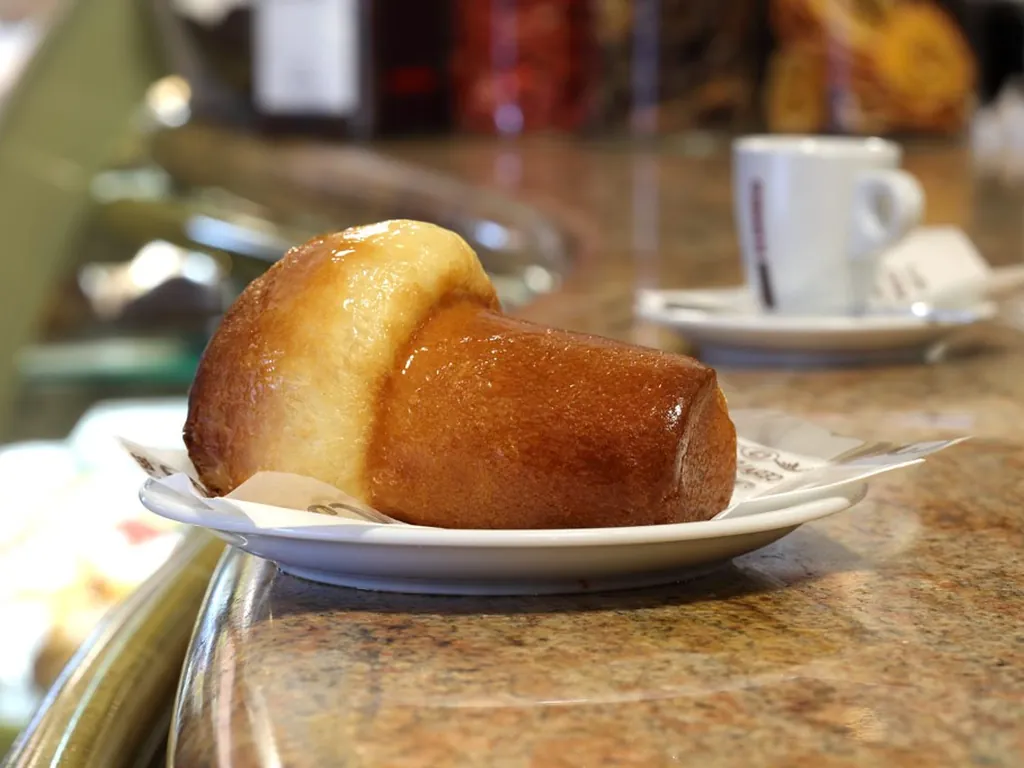
Glossy, soft, swollen with rum syrup. The babà is one of the most Neapolitan sweets there is, and yet it was born far away, at the court of a king without a kingdom.
King Stanislas and the cake that was too dry
Stanislas Leszczyński, the exiled king of Poland, lived in Lorraine, at Lunéville. Tradition says he found the kugelhopf, the yeast cake typical of the region, too dry, and had it soaked in liqueur. A fan of One Thousand and One Nights, he is said to have called it “Ali Baba”.
His pastry chef, Nicolas Stohrer, followed the king's daughter Maria, bride of Louis XV, to Versailles and brought the recipe with him. In Paris the cake became the baba au rhum, soaked in rum.
Arriving in Naples
The babà reached Naples between the late eighteenth and the nineteenth century, with the French cooks of the great families and of the Bourbon court. Neapolitan pastry chefs gave it the mushroom shape we know, a softer dough and a generous soak. From a court dessert it became a street sweet, to be eaten standing at the bar.
“Sì nu babà”
In Naples, telling someone “sì nu babà” (“you are a babà”) is an affectionate compliment: it means they are sweet, good, irresistible. It shows how deeply this cake has entered the way the city speaks.
How to enjoy it
The classic babà is simple, just dough and soak. But it lends itself to a thousand variations: with custard and sour cherries, with cream and strawberries, with chocolate, or with limoncello, as a tribute to the Amalfi Coast.